Farming & Production Chains
Hello everyone 👋,
Welcome back to another Thveit devlog!
In our first devlog, we talked about the idea that nothing in Thveit simply appears on a shelf. A loaf of bread starts as a field of rye. A mug of mead starts as a row of barley. A warm coat starts as a sheep grazing in a pasture. We've mentioned this idea in almost every devlog so far, but we've never actually sat down and walked through it start to finish - so that's what today is for.
This ended up being a bigger devlog than we planned. Once we started listing out everything that feeds into a single settlement - crops, livestock, timber, stone, wool, tools, foraged goods, fishing, and eventually the sea itself - it became clear that Thveit's economy isn't really one system. It's a dozen small ones, all quietly feeding into each other. So grab a mug of something warm, and let's walk through it field by field, building by building.
The Land Provides
Every settlement starts by figuring out where it has room to farm. Thveit doesn't track soil quality - any patch of land that's flat and clear of trees, rocks, or other obstructions can be turned into a field. What matters instead is space. A farm squeezed into a gap between the trees will only ever be so large, while a settlement built around open, cleared ground can spread its fields out and grow far more.
Farming itself follows a full cycle, not a single click. Fields need to be plowed and sown before anything grows, tended throughout the season as crops develop, and finally harvested by hand once they're ready. Miss the harvest window, and a field can spoil before it's ever brought in - which is part of why a settlement's first few farmers tend to become some of its most valuable settlers early on.
Right now, Thveit's crops include:
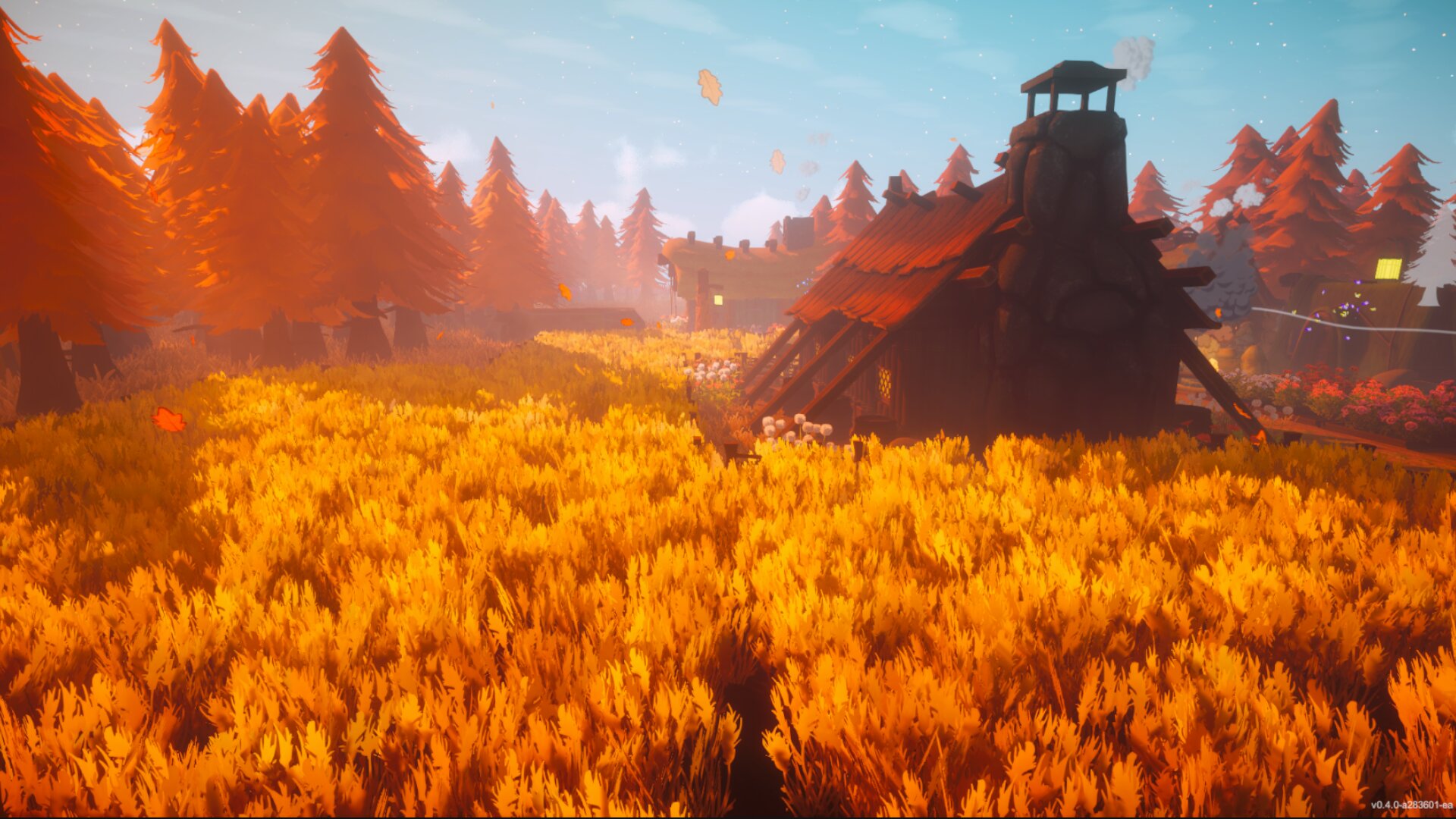
- Rye - the backbone of bread and one of the most reliable grains to grow, usually the safest first crop for a brand new field.
- Barley - flexible enough to become drink or feed, depending on what your settlement needs most, and one of the faster grains to bring to harvest.
- Oats - a hardy crop that keeps both animals and settlers fed, and one of the more forgiving crops if a season turns colder than expected.
- Carrots - a simple root vegetable that turns any dish into something more filling, and quick enough to plant that they're often a new settlement's first crop.
- Pumpkins - slow to grow and take up more space than most, but a single successful harvest yields enough to be worth the wait.
- Cabbages - a dependable staple crop that stores well through the colder months, making it a favorite for settlements planning ahead for winter.
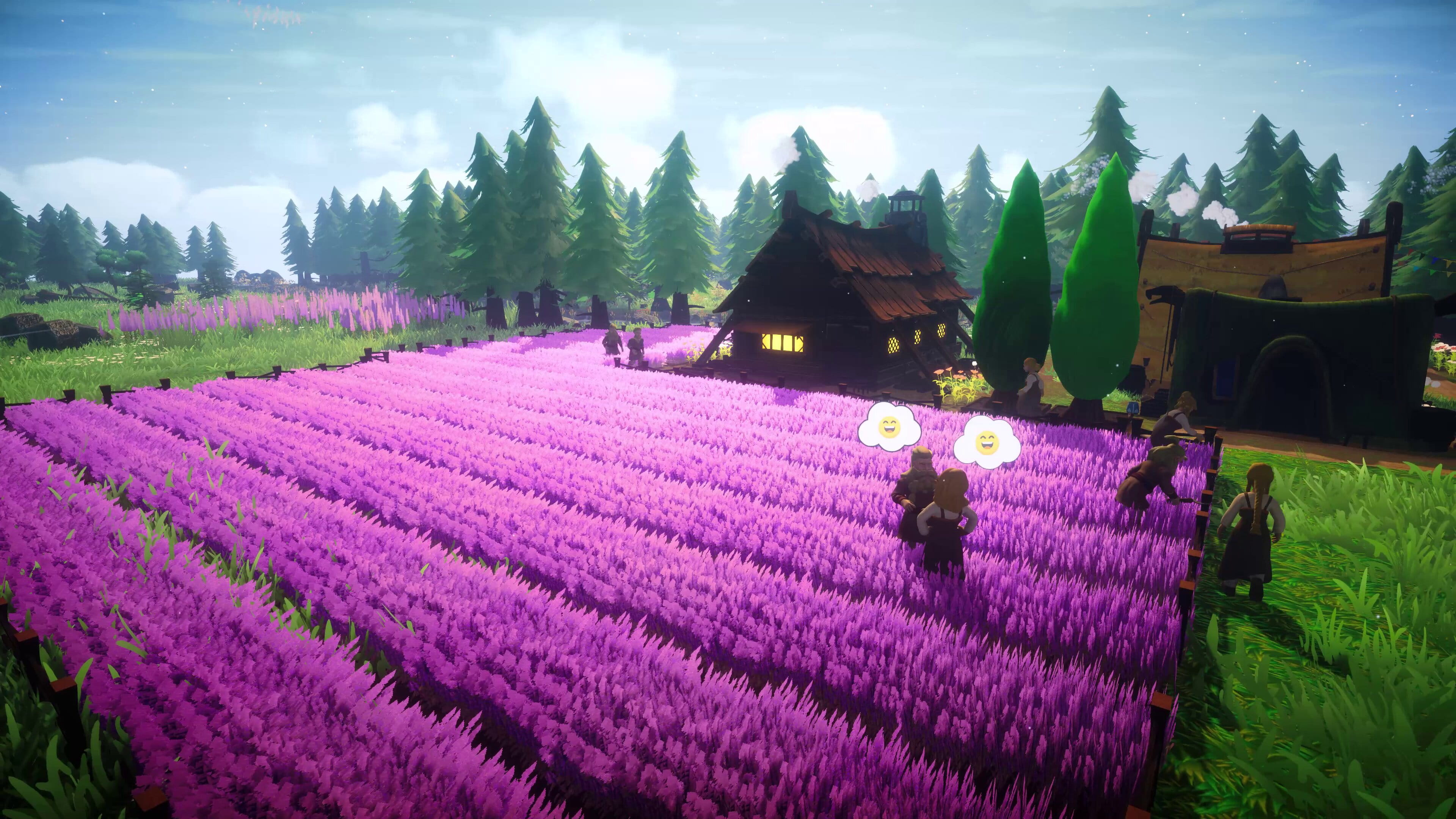
- Lavender - the odd one out. It isn't food at all, but a cash crop grown for its value on the trade table rather than anything it puts on a plate.
Each crop follows the land through the seasons we described in our first devlog - planted, tended, and harvested according to its own calendar, with fields sitting fallow or freezing over once winter arrives. Part of the early game is simply finding enough open, flat ground to farm on, and deciding how to divide that space between the crops your settlement needs most.
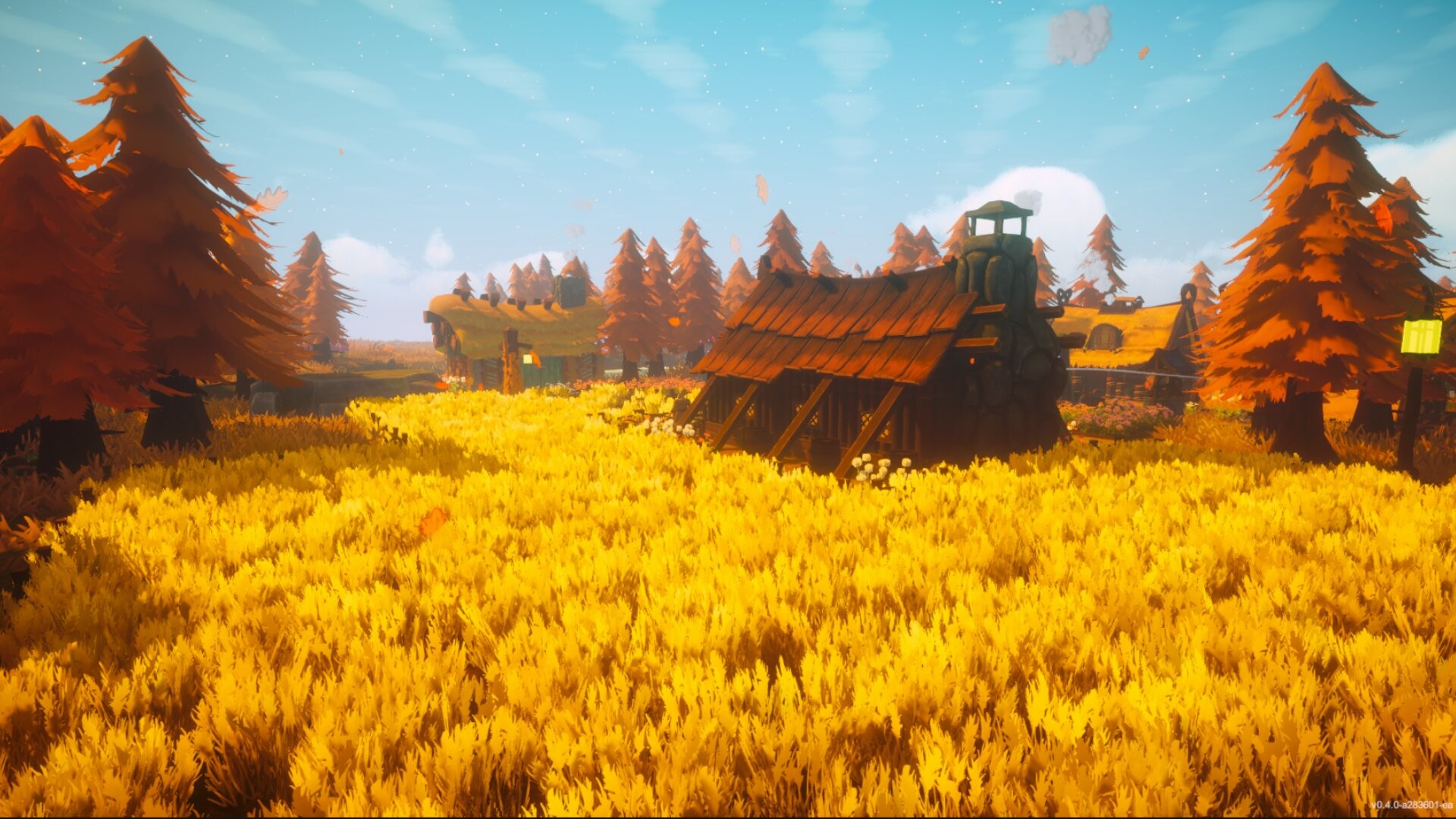
From Rye to Bread
Bread is the clearest example of how a production chain comes together in Thveit, so it's the one we like to point to first.
It starts with a farmer sowing and harvesting a field of rye. Once cut, the rye doesn't go anywhere near a table just yet - it's hauled by hand to a mill, where a miller grinds it down into flour. From there, the flour makes its own trip to a bakery, where a baker kneads, shapes, and bakes it into loaves ready to feed your settlement. Three separate buildings, three separate professions, and a fair amount of walking, all in service of a single loaf of bread.
Rye becomes flour. Flour becomes bread. Every step in the chain requires buildings, workers, and time.
Picture Bjorn, the lumberjack we introduced back in our second devlog. Long before he ever picks up an axe, his morning starts with breakfast - bread that was rye in a field just days earlier, ground by a miller he's never met, and baked before sunrise by someone who never sees him eat it. He doesn't think about any of that, of course. He just eats, and heads to Woodholm. That invisible chain of strangers working together so Bjorn can start his day is, in a lot of ways, the whole game.
It's a small chain compared to some of what's coming later in this post, but it sets the pattern for almost everything you'll produce in Thveit: raw resource, processing step, finished good, and a settler at the end of it who never has to think about how any of it got there.
Barley's Two Futures
Barley is where things start to branch, and it's the first real fork in the road your settlement will run into.
Send it to the brewery, and a brewer turns it into beer - the drink of choice for a well-earned evening at the Meadholm alongside your settlers. Send it to your pastures instead, and that same barley becomes feed, keeping your livestock fed and healthy through the year. Both paths matter. Skimp on the brewery, and Meadholm sits quiet on evenings that should be full of settlers unwinding after a long shift. Skimp on feed instead, and your sheep and goats grow thinner, producing less wool and meat than they otherwise would.
The tricky part is that barley isn't infinite. Every sack sent to the brewery is a sack your pastures won't see, and the reverse is just as true. We like this kind of decision because it doesn't come with a single correct answer - it comes down to what kind of settlement you're trying to build.
A settlement leaning into festivals, gatherings, and a lively Meadholm might prioritize the brewery and accept a slightly leaner pasture. One focused on wool, cloth, and a steady meat supply will keep more barley flowing to feed instead, and simply brew less often. Neither approach is wrong, and we like that the same field can end up telling a different story depending on which settlement it belongs to.
The Eldhus: Where the Harvest Becomes a Meal
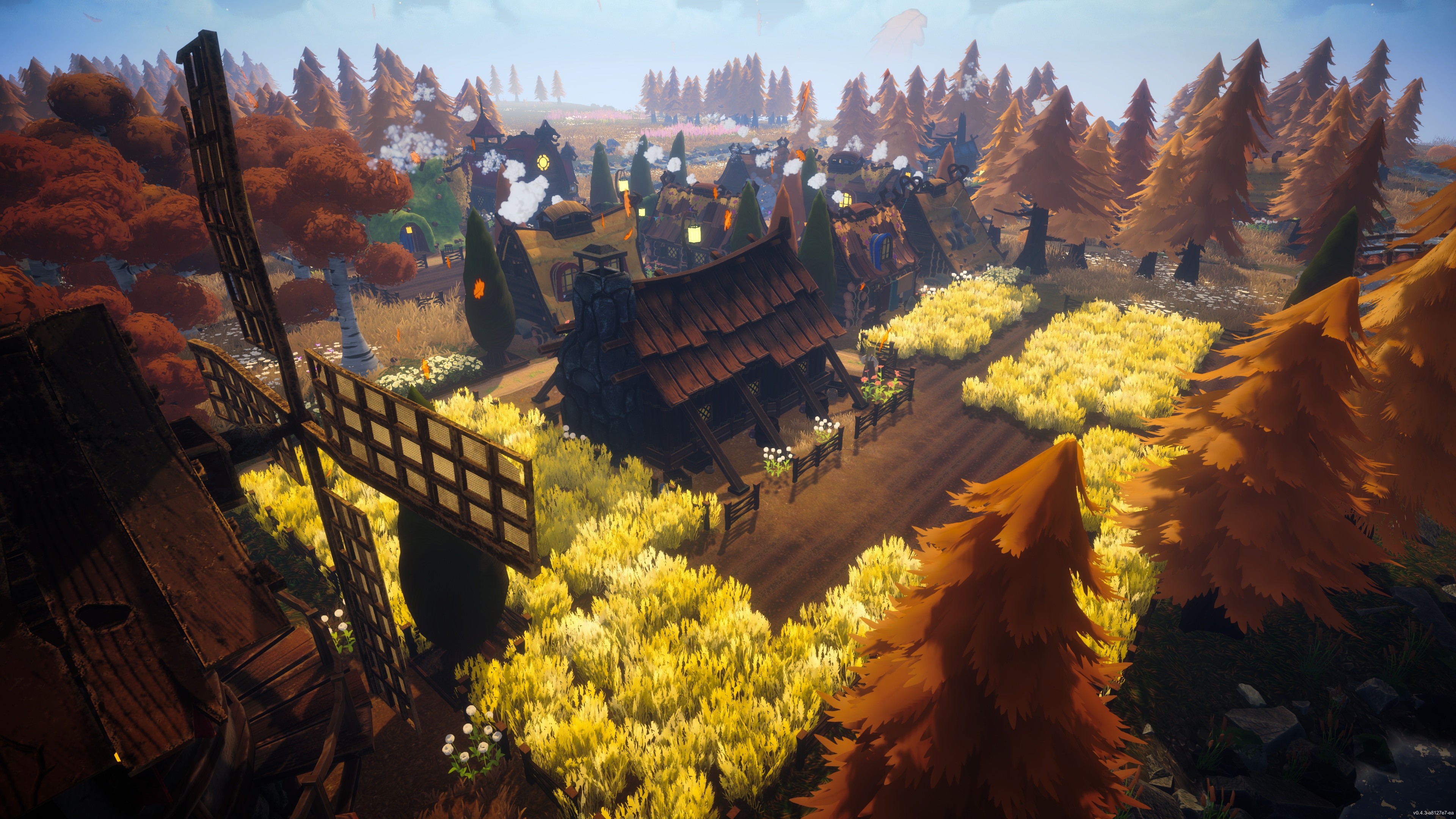
Not every crop needs a dedicated building of its own. Oats, carrots, pumpkins, and cabbages all flow into the Eldhus instead, our name for the communal cook-house where raw ingredients are turned into something a settler would sit down and eat.
The Eldhus works a little differently from the mill or the brewery. Rather than one fixed ingredient in and one fixed product out, you choose the recipe yourself - deciding which dish your cooks prepare based on what's sitting in storage. Oats can go two directions here, either toward the animals as feed or into the Eldhus as an ingredient. Carrots and pumpkins get chopped, roasted, and combined with whatever else is in stock, while cabbages provide a dependable, storable ingredient that keeps meals going even once fresher crops are out of season.
We like to imagine the Eldhus as the one building every settler passes through in a day, whether they work the fields, the sawmill, or the docks. Smoke rising from its chimney at midday, the smell of something cooking drifting between the homesteads - it's meant to feel like the heart of the settlement's daily rhythm.
The Eldhus rewards variety and choice. A settlement relying on a single crop can still keep its settlers fed, but a settlement drawing from rye, oats, carrots, pumpkins, and cabbage has real recipes to choose between - and every dish that comes out of the Eldhus gives your settlers a comfort boost. Finished dishes don't have to stay in the Eldhus either. We're planning for them to travel onward to the Meadholm, to festivals, and to larger settlement gatherings, though exactly how that will work is still being designed.
Lavender: A Field That Isn't Food
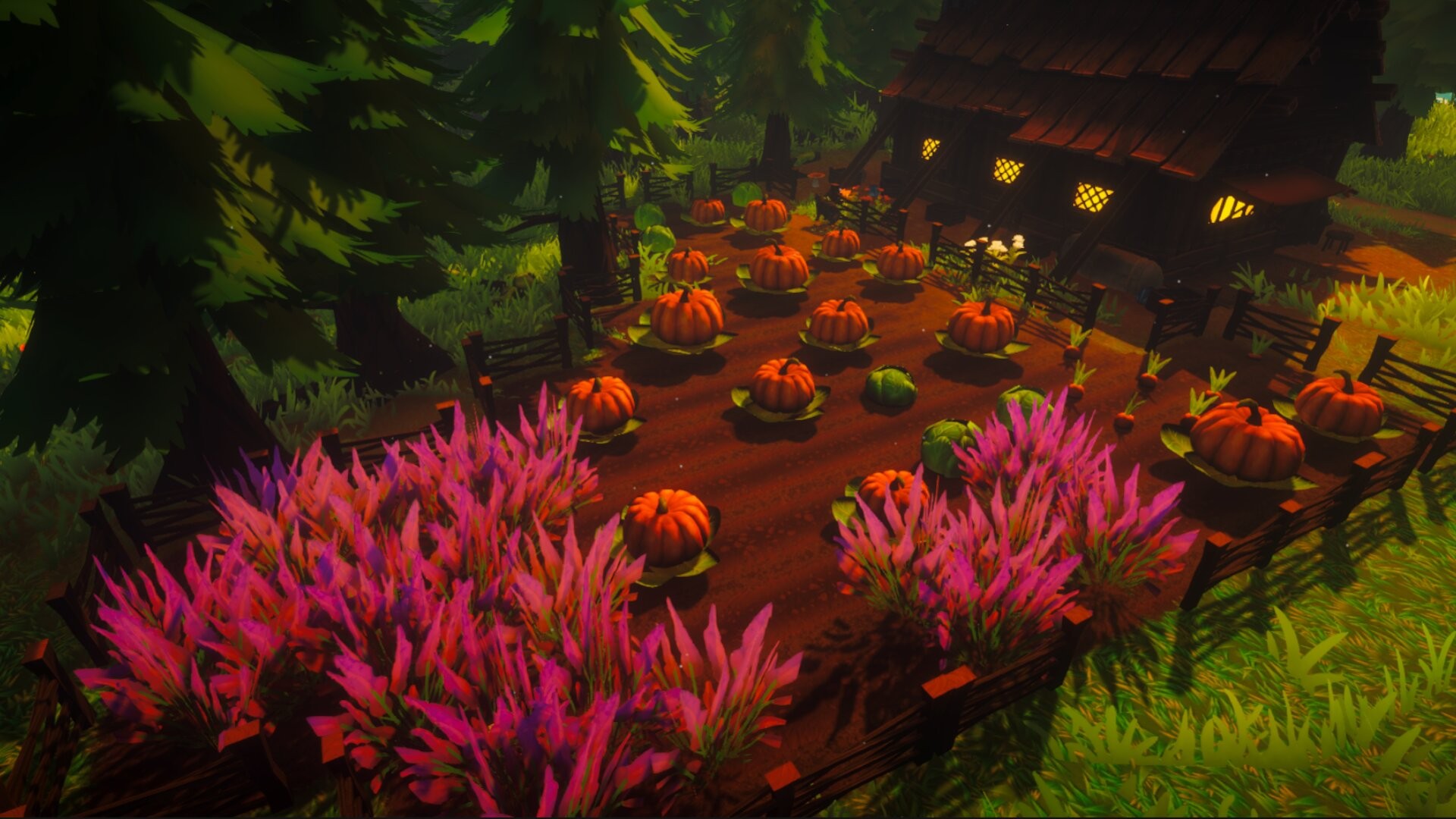
Lavender doesn't feed anyone, and that's exactly the point. It's grown for one purpose - trade.
A field of lavender takes up the same space a rye or barley field would, so choosing to grow it is a genuine trade-off. You're giving up food production for a good that exists purely to sell, gift, or exchange with neighboring realms. As we start building out trade in future updates, crops like lavender are what will give your settlement something distinct to offer beyond raw stone and timber.
We'll have much more to share about trade and distant lands once that system is further along.
Timber & Stone: Building the Settlement
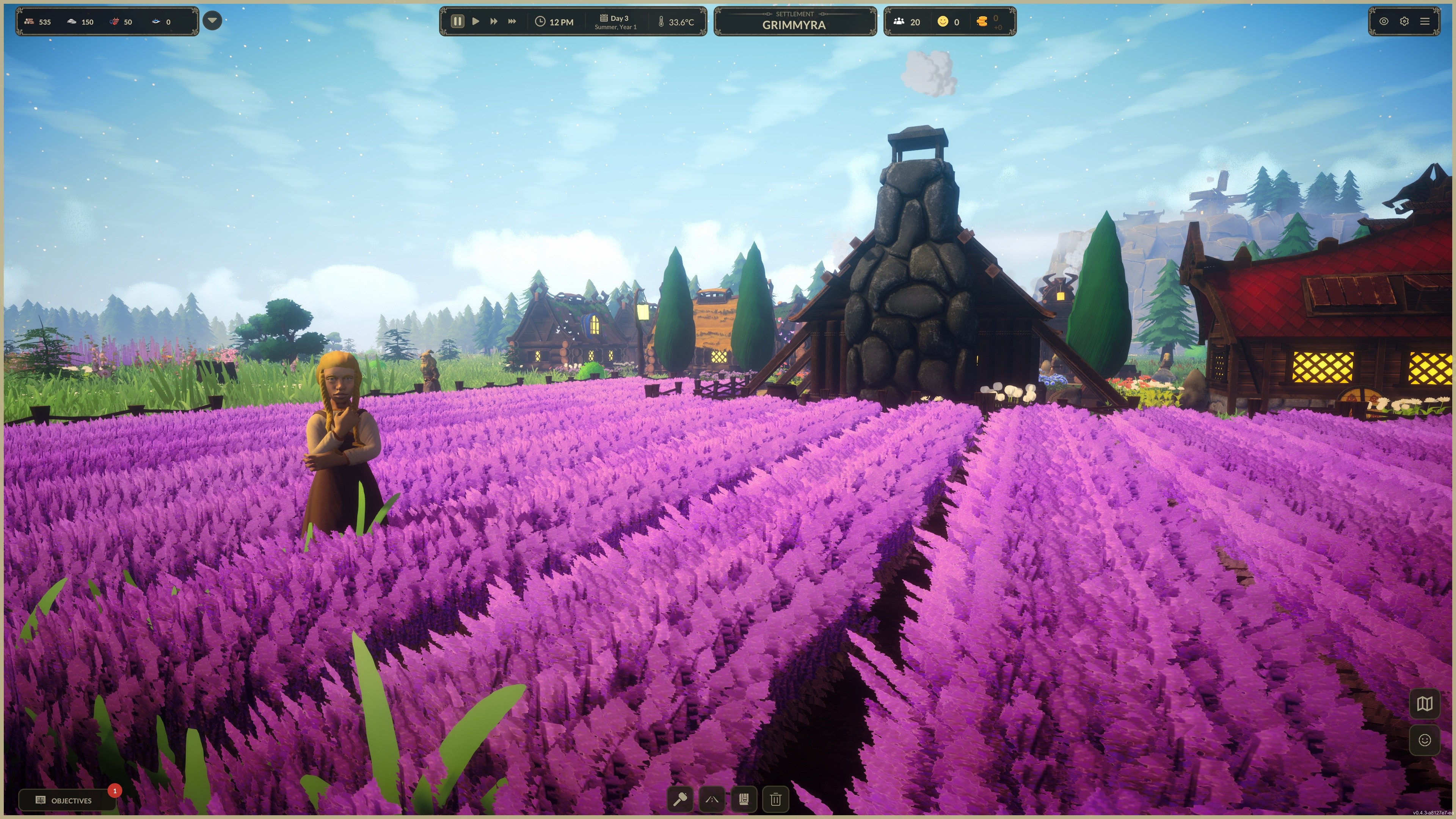
Not everything in Thveit's economy grows in a field. Wood and stone form the backbone of construction, and wood in particular pulls triple duty once it's felled.
Logs cut by your woodcutters can go three different ways. Some are stockpiled as firewood, keeping homes warm through the cold months we described in our first devlog. Others are used directly as a raw building material for early, simple structures. The rest are hauled to a sawmill and cut into planks, the material most of your permanent buildings are made from.
Stone, for now, follows a much simpler path - quarried straight from deposits scattered across the landscape and used directly in construction. It's a smaller chain than timber's today, though it's one we expect to build out further as more advanced buildings start calling for refined materials.
Where food chains keep your settlers fed, timber and stone are what let your settlement physically grow - and as we mentioned when introducing Thveit's building categories, keeping your sawmill close to both the forest and your warehouses is what separates an efficient settlement from a struggling one.
Wool, Cloth, and Staying Warm
We first mentioned sheep back when introducing Thveit's settlers and their needs, but we haven't talked about where their wool ends up. Once sheared, it feeds one of the most important chains in the game - the one standing between your settlers and a brutal winter.
Wool is spun into cloth, and from there it's carried to a building we haven't shown before: Woolholm, where tailors cut and stitch that cloth into the clothing your settlers wear. Woolholm produces more than one kind of garment: lighter clothing for the warmer months, and heavier, layered winter wear for when the cold sets in, so what your settlers are dressed in changes right alongside the season outside. It sounds simple, but a settler without proper clothing risks freezing once the snow arrives. A well-run pasture feeds your economy. A busy Woolholm keeps your people alive.
Tools of the Trade
Every profession in your settlement, from farmers to woodcutters to bakers, works faster and more reliably with the right tools in hand. We're still refining exactly how this chain will look in full, but the intent is straightforward: raw materials flow into your craftsmen, and tools flow back out to everyone who depends on them to do their job well. We'll share more on toolmaking specifically once that system is further along.
Herbsholm: Berries, Mushrooms & Medicine
Not everything your settlement needs comes from a plowed field. Herbsholm is where your foragers bring in what the wild has to offer - berries picked from the undergrowth, mushrooms gathered from the forest floor, and herbs collected for something far more important than flavor.
Herbs processed at Herbsholm become medicine, treating sick and injured settlers before a bad illness turns into a funeral. Berries and mushrooms, meanwhile, add valuable variety to what the Eldhus can prepare, supplementing your farmed crops with whatever the forest is willing to give up. A settlement that leans only on its fields will survive; one that also invests in Herbsholm tends to thrive.
Goats, Sheep, and What the Water Provides
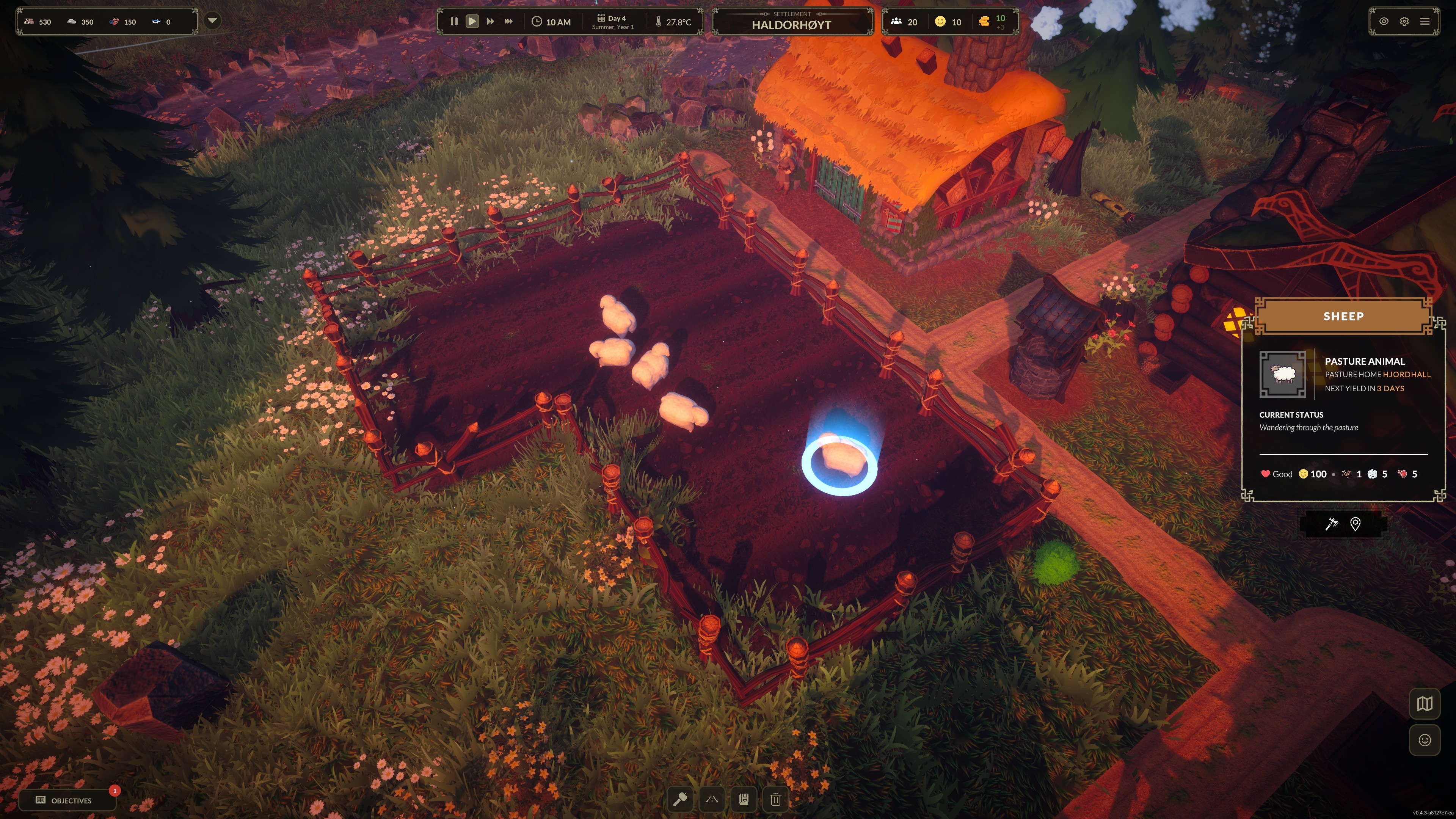
We touched on livestock briefly in our first devlog, but they're worth revisiting here as part of the bigger picture. Sheep provide wool and meat, goats provide milk and meat, and both need pastures, tending, and a settler willing to look after them daily.
Fishing rounds out the food side of the economy. Wherever your settlement borders a river, lake, or coastline, fishing docks let you draw food directly from the water - an important supplement once your farmland can't be expanded any further.
The Whale's Choice
Further out past the fishing docks, in deeper water, swim whales - and how your settlement chooses to treat them is one of the more consequential decisions we're building into Thveit's economy.
Hunt them, and for now, that mostly means one thing: profit. A successful hunt brings home meat to feed your settlement, and what's left sells for a good price at the trade table - a straightforward, if risky, way to bring real wealth into your settlement. Down the line, we're also toying with the idea of tying whaling into how a settlement shows off its riches, something closer to a mark of prosperity than a raw material, though that's very much an idea rather than a plan at this stage.
But whales, like everything in the sea, belong to Njord. As we shared in our previous devlog, Njord's favor already decides whether the Kraken protects your ships or drags them beneath the waves. Hunting whales angers him - whether or not you've ever worshipped him at all - and the consequences follow you onto every voyage after. Ships lost to the Kraken, or to something worse stirring in deeper water. Trade routes sabotaged without warning. An economy that suffers long after the hunt itself is forgotten.
Leave the whales be, and something different happens. Protect them, keep your waters peaceful, and over time they'll grow bolder - surfacing closer to shore, breaching within sight of your settlement, and on quiet nights, you might even hear them sing. Settlements that maintain this peace long enough will earn a permanent badge of Njord's favor, granting passive benefits such as:
- Njord's Calm - safer seas, with ships far less likely to be lost to storms, reefs, or hostile creatures on trade and exploration routes.
- Song of the Deep - a lasting comfort bonus for settlers living in homes near the coast.
- Tides of Plenty - a passive boost to your fishing docks, as whales draw fish closer to shore.
Nothing here is final, and we're still shaping exactly how this system will feel in practice, but we love the idea that a single, repeatable choice - hunt or protect - can shape your settlement's relationship with the sea for the rest of the game.

Planning Around the Chain
None of this works if it's scattered randomly across your settlement. Fields need to be near a mill, a mill needs to be near a bakery, and a bakery needs to be near the settlers who'll eat the bread. The further apart these buildings sit, the more time your settlers spend walking instead of working.
This is why we keep coming back to the same idea devlog after devlog: Thveit rewards thoughtful layout over brute-force expansion. A settlement with a tight, well-planned farming district will consistently outperform one that's simply larger, and watching a production chain click into place - fields feeding a mill, a mill feeding a bakery, a bakery feeding a full settlement - is one of the most satisfying loops in the game.
Looking Ahead
This is only a slice of the production systems taking shape in Thveit. As development continues, we'll be expanding the list of crops, adding new buildings to the chain, and giving trade goods like lavender somewhere real to go.
We'd love to hear from you - which production chain are you most looking forward to building? And when whales finally arrive off your coastline, will you hunt them, or protect them?
If you've enjoyed reading this devlog and would like to follow Thveit's development more closely, we'd love to have you join our Discord community. It's the best place to chat with us, share your ideas, ask questions, and connect with other players following the journey.
Your feedback genuinely helps shape Thveit. We read every comment and truly appreciate everyone who takes the time to share their thoughts.
Thank you so much for reading and supporting our journey. We'll see you in the next devlog. ❤️

What would you like us to cover in the next devlog?